Helping The Homeless
Homeless people in our communities are a fact of life, especially in big cities. Many of us don't know how to interpret this situation or what we can do to help. We may vacillate between feeling guilty, as if we are personally responsible, and feeling angry, as if being homeless is entirely on their shoulders. The situation is, of course, far more complex than either scenario. Still, not knowing how to respond, we may fall into the habit of not responding at all. We may look over their heads and not make eye contact, or look down at the ground as we pass, falling into a habit of ignoring them. Each time we do this, we disconnect ourselves from a large portion of the human family, and it doesn't feel right.
Most of us know in our hearts that the homeless and the poor are not so very different from us. They may be the victims of poor planning or an unavoidable crisis. Some of them are mentally ill, some are addicted to drugs or alcohol, and some are choosing to be homeless for reasons we may never understand. We can imagine that, given their lives, we would likely have ended up in the same place. This does not mean that we are meant to rescue them as they are on their own learning path, but it does remind us that we can treat them as equals, because that is what they are. Even if we aren't able to offer food, shelter, or money, we can offer a blessing as we pass. We can look them in the eye and acknowledge our shared humanness, even if we don't know how to help them. This simple act of kindness and silent or spoken blessings can be helpful to those living on the street.
If you want to help with information, you can learn about the services in your area and share the locations of food banks, shelters, and other resources. As parents, perhaps you would like to plan ahead, talking with your children about how as a family you would like to handle these situations. Whatever you decide to do, you will feel much better when you make a conscious choice not to simply look away.
Friday, March 30, 2007


Thursday, March 29, 2007
LAST DAY OF EXAM! --I'M OFF TOM!!! YEA! :-)
no more pencils, no more books...
no more teacher's dirty looks...
heheheeeee.... ;-)
should update that with: no more powerpoints or lectures (something of that effect!)
no more teacher's dirty looks...
heheheeeee.... ;-)
should update that with: no more powerpoints or lectures (something of that effect!)
Wednesday, March 28, 2007
A Moment of Truth for Every New Doctor
Aaron Singh -- There comes a moment in every medical student’s life, when he realizes that all he’s learning is not just for exams, that one day he will be out there on his own, with real live patients and no medical professor leaning over his shoulder to guide him.
I knew it would happen.
And this week it did.
I have blogged here before about being a first-aider, and here about my University having a highly theoretical premedical course without much clinical skill development. Back before my encounter with an epileptic woman aboard a plane, I wouldn’t have hesitated to rush forward during a medical emergency and volunteer whatever help I could. Then I read the comments under the first-aid post, advising me not to rush into situations. I also heard horror stories from other medical students about medics and doctors getting sued by people who didn’t want to be saved. And I hesitated. All that I had believed about medicine was challenged. You couldn’t just rush in and save someone if they didn’t want to be saved. And if you didn’t know EXACTLY how to help and what to do in that situation, it was better perhaps not to step forward at all.
It was a normal Monday afternoon. I spend my afternoons in Pharmacology lab sessions with about half the medics in my year. This particular afternoon’s practical was a laid-back, slow one, and I was at my table, mixing drugs up, when behind me I heard a loud crash.
I turned around and saw that the whole lab was still. Whatever had happened was hidden from my view by another table, along with the medics sitting at it. Other medics were craning their necks to get a good view, but no one seemed to be moving. Nothing seemed urgent. I assumed someone had dropped another test-tube or beaker, or some apparatus had fallen to the floor, and everyone was taking advantage of the interruption to take their minds off their work for a while.
But people kept staring. I got that feeling you get in your stomach when you know something isn’t right. No one was moving, not even the demonstrators. I asked around, “What’s happened? Did someone drop something?” but no one answered. They just kept staring at the floor.
So I crossed the lab and came around the table. And lying on the ground before me, in the middle of a slowly growing crowd of onlookers, was a student. Passed out on the floor.
No one moved. A lab full of some of the brightest medical students in the world, and none of them had any idea what to do when someone fainted in front of them.
Then it kicked in. I was a first-aider. I was a MEDIC. I could DO something here. Go forward, you fool. She could be hurt. I started to step forward…
…and stopped.
And through my mind flashed a single question, a question I am ashamed to admit ever crossed me now, especially at such a critical juncture:
Will I get sued?
Seems ridiculous in retrospect. She was just a medical student who had passed out in the lab. Not a patient going into cardiac arrest or requiring complex surgery. But that’s what flashed through my mind.
I was afraid to practise my art. Afraid to accept responsibility.
Everyone kept staring, myself included now. Finally a grad student raised his voice, “Is anyone here a first-aider?”
I started to reply, “Ye—“
Then a long white coat flashed by me. A tall handsome demonstrator, exactly the kind you’d expect to come zooming out of the sky to save you in a crisis, rushed past and bent over the girl, carrying a first aid kit. I blinked. A senior first-aider! Now maybe I could help.
So I joined him and introduced myself. The girl was already recovering consciousness; she had just fainted momentarily, probably due to tiredness. In a few minutes she could stand, and we sent her home. The tall demonstrator clapped me on the back and went back to work. No harm done.
But the incident is still ringing in my mind. I’ve got a long way to go before I’m out there on my own, but it scares me. Both that I hesitated, and that I was afraid to perform my duty. The first duty of a doctor. I’m safely ensconced in preclinical medicine now, with supervisors looking over my shoulder to clean up any messes I make, but it’s only a matter of years before I find myself in a white coat and having to tend to real patients. And when that time comes, I pray I do not hesitate.
February 23, 2007 in Aaron Singh | Permalink
This has started quite a discussion: Read On!
Tuesday, March 27, 2007
I AM FREE THIS WEEKEND! :-)
Yes! SO GREAT TO SAY THAT! :-) 4 More Days to Go! :-) I'll soon be done! Next week will be the only week where I don't have an exam; every week, following that I have exams and will continue to be studying until I take "THE BOARDS" in June! YUCK!!
I can't wait for this dreadful week of exams to be OVER! :-) I need to feel ALIVE again!
I can't wait for this dreadful week of exams to be OVER! :-) I need to feel ALIVE again!
Monday, March 26, 2007

Friday, March 23, 2007
Elizabeth Edwards-- A True Heroine!
My Message to the Edwards:
As a second year medical student at UMDNJ-SOM, I hope that every patient I encounter is as strong and determined as you are, Elizabeth. You are a great role model for women battling Breast Cancer everywhere and I thank you for your courageous efforts. I truly admire the persistance and love that you and your husband share and wish you all the best in fighting this terrible disease. We're here rooting for you and your family, Elizabeth! All The Best!
Video Worth Watching!
Thursday, March 22, 2007
How does it Feel to Kiss a Dolphin?

This is My Personal Encounter with Cupid at Six Flags, Marine World in San Francisco. I got to train him, feed him, and kiss him! ;-) He feels very smooth and rubbery! He's just a BABY but he's SUPER SMART! He splashed a lot of water on me! One day, hopefully; I'll be able to swim with him... :-)
Wednesday, March 21, 2007
Sanjaya Makes The Girls Cry

Why do people keep voting Sanjaya Malakar back to "American Idol"?
1) The Stern Effect
2) The Web Effect
3) The Indian Effect***
4) The Stick-It-To Simon Effect
5) Sympathy Vote???
Is it UberDesi or is it Talent?
HAPPY FIRST DAY OF SPRING! :-)

Happy Spring Equinox! --YEA!!!
Nowruz Pirooz!!! --Happy Persian New Year!
Today, March 21st is Flower Day! --Make sure you send a flower to someone you think is SPECIAL!!! ;-)
@----------}-----------------------
On Spring Equinox, the Sun rises exactly in the East travels through the sky for 12 hours and sets exactly in the West. On Equinox, every place on earth experiences a 12 hour day and 12 hour night! (Equinox=equal night)
After the Spring Equinox, the Sun still continues to follow a higher and higher path through the sky, with the days growing longer and longer, until it reaches it highest point in the sky on the Summer Solstice!
Mother Nature is so COOL! =c)~
My Dress for the Medicine Ball?

A model walks the runway at the Joey Tierney Fall 2007 fashion show, during the Mercedes Benz Fashion Week at Smashbox Studios in Culver City, Calif., on Tuesday, March 20, 2007. (AP Photo/Matt Sayles)
Tuesday, March 20, 2007
Sunset at San Francisco Bay

Pic I took from a cruise ship in San Francisco.
(I'm a good photographer, no?) ;-)~
Quick Way to Get Ice off Your Car When You Have to Run to an Exam!
One fine day... a lot of Ice fell from the sky...

...it would take forever to scrape ice off each window; so what did I do? -I rolled down the glass of my car window and observed the shielded pane of ice that covered it...

...and then I punched the ice and made a hole and said, "What a good girl am I!" :-)


...it would take forever to scrape ice off each window; so what did I do? -I rolled down the glass of my car window and observed the shielded pane of ice that covered it...

...and then I punched the ice and made a hole and said, "What a good girl am I!" :-)

The Namesake


Pics I took of Mira Nair and Jhumpa Lahiri at the book signing and movie promotion of "The Namesake" at the Barnes and Nobles on Union Square. (yet to see, though... -Ufffie yeh,...EXAMS bhi Nah!)
Ting-A-Ling-Ting-Ting-Ting-A-Ling...
i miss my jack in the box from when i was lil --it used to always surprise me! :-) did u ever have one?
Wednesday, March 14, 2007


Saturday, February 24, 2007
Crazy Week Coming Up...
Medicine EXAM, Pharmacology EXAM, Pathology EXAM, Practices, Dress Fittings, United Way Drive, Bone Marrow Drive, Blood Drive, More Fittings, More Practices, Psychiatric Paper, Rotations at Virtua Health in Camden, More Practices, More Dress Fittings, APAMSA Elections, APAMSA Chapter Report, Vagina Monlogues, Fashion Show, oh and of course, classes 8-5 everyday...!
Thursday, February 22, 2007
too much work & too lil play...
I need some Luvin' With a Whole Lot of Pampering and Mega Romance....
The lil Things that Make Pari Happy...
Ever try Maggi--Hot and Sour, bought from Patel Bazaar in Stratford, NJ; that states next to Kareena Kapoor’s picture that it was reduced from Rupees 59 to Rupees 52, poured over your Cheese Pizza Bites, bought from ShopRite; pulled fresh out of your oven, after a long ethics debate while you savor it; trying hard to ignore the ignorance around you…?
Mmmmm….. sooo gooooood! =c}~
Ohh... and just for today--get fat and feel good about it!

I know, I know, I'm a Dominos traitor, but it's for a good cause!
Mmmmm….. sooo gooooood! =c}~
Ohh... and just for today--get fat and feel good about it!

I know, I know, I'm a Dominos traitor, but it's for a good cause!
Spraying for the Joy of Spraying Where There Be No Need For Spraying...
I had a notice from my management a couple of days ago that pest control will be going to each apartment and if we needed our apartment treated to empty out all our drawers and cabinets and if we didn't require this service then not to empty out anything. Since, I don't have any pest problems in my apartment, I didn't do anything and figured they would leave my apartment alone as all the drawers and cabinets were closed and everything was in its appropriate place. Talk about people not following directions and not doing their job properly: I come home from school to this rather nauseating smell with a big sticker on my kitchen counter saying, "Your Apartment was Treated Today --Signed by Pest Control".
Is this what we educate and train ourselves for? To give treatment where there is no treatment needed? Do we as doctors often do this to our patients? Indeed we give prophylaxis while we await lab results when the benefits outweigh the risks. But, how many doctors out there are guilty of prescribing antibiotics for a cold that was in fact viral in nature? What good is our training if we don't use our head as to when and where we need to apply it? We're demeaning ourselves as being these brainless machines, just fulfilling tasks in a huge assembly line that happens to go circular around something we call, the Earth!
Is this what we educate and train ourselves for? To give treatment where there is no treatment needed? Do we as doctors often do this to our patients? Indeed we give prophylaxis while we await lab results when the benefits outweigh the risks. But, how many doctors out there are guilty of prescribing antibiotics for a cold that was in fact viral in nature? What good is our training if we don't use our head as to when and where we need to apply it? We're demeaning ourselves as being these brainless machines, just fulfilling tasks in a huge assembly line that happens to go circular around something we call, the Earth!
Beware of someone acting out of character...
55 yr. old man, smoker, comes home, screams at his kids, hits his oldest kid, uses the four letter word at his wife, has never done it before.
Q: What's the diagnosis?
A: Metastatic Lung Cancer To The Brain.
Q: What's the diagnosis?
A: Metastatic Lung Cancer To The Brain.


Sigh... Where's the justice?
Sword seized after man mistakes porn for rape
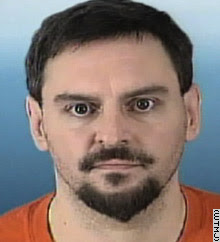
James Van Iveren, who lives with his mother, says he took matters into his own hands because he didn't have a phone to call police.
Story Highlights
• James Van Iveren says he feels "stupid" after breaking into neighbor's apartment
• Neighbor says Van Iveren held him at sword-point, demanding proof he was alone
• Neighbor says he played part of the pornographic movie for police
• Van Iveren charged with criminal trespass, criminal damage, disorderly conduct
OCONOMOWOC, Wisconsin (AP) -- A man says he broke into an apartment with a cavalry sword because he thought he heard a woman being raped, but the sound actually was from a pornographic movie his upstairs neighbor was watching.
"Now I feel stupid," said James Van Iveren, who has been charged in the case. "This really is nothing, nothing but a mistake."
According to a criminal complaint, the neighbor told police that Van Iveren pounded on the door and kicked it open without warning February 12, damaging the frame and lock. (Watch what damage Van Iveren allegedly left and how the neighbor will watch porn in the future)
"Where is she?" Van Iveren demanded, thrusting the sword at the neighbor, the complaint said. "Where is she?"
The neighbor told police Van Iveren became increasingly aggressive as he repeated the question, insisting that he had heard a woman being raped. The complaint said that, with the sword pointed at him, the neighbor led Van Iveren throughout the apartment, opening closet doors to prove he was alone.
The neighbor later played for police the part of the DVD he believed Van Iveren heard downstairs.
Van Iveren, 39, of Oconomowoc, was charged with criminal trespass, criminal damage and disorderly conduct, all while using a dangerous weapon, and is scheduled to appear in court March 5. Together, the misdemeanor counts carry a maximum sentence of 33 months in jail.
Van Iveren said Tuesday that he heard a woman "screaming for help," grabbed the sword, bounded up the stairs, kicked in the apartment door and confronted the man who lived there.
"I intended to hold it behind my back and knock. But I froze and instead, what happened happened," he told the Milwaukee Journal Sentinel.
Contesting his neighbor's account, Van Iveren said he didn't look anywhere in the apartment except the front room, and that he never threatened the neighbor with the sword.
"I had the sword extended, but that was all," he said.
Van Iveren, who lives with his mother in the downstairs apartment, said he did not call police when he heard the noises because he does not have a telephone. He said he barely knew the upstairs tenant.
Police seized Van Iveren's sword, which he said was a family heirloom.
Wednesday, February 21, 2007
Learning Dentistry...
I had my practical dentistry training today! Man, dentists aren't bozos--they do need to know a lot! No wonder in Europe, you have to go to medical school first and then specialize in dentistry. So this means I need to know a bit of dentistry too so I can direct my patients accordingly. There's a lot that dentists need to know about medicine as well! Like what medications would you give someone with liver cirrhosis who can't metabolize the drugs you need to give for anesthesia or what kind of prophylaxis to give someone with a mitral valve prolapse. Even treating a patient with a hip fracture replaced with a prosthetic can be fatal as bacteria from oral surgery would be prone to settle at the hip prosthetic and can be life threatening! Epinephrine is added to the anesthetic drugs to constrict the blood vessels in order to minimize bleeding but also to make sure that the anesthesia stays local so you get the maximum affect from a small dose without it leaving and dispersing into the systemic circulation. So can you give epinephrine to an anxious patient with a heart condition and a history of MIs? These are things that I think about in my practice but I didn't realize that dentists have to make these decisions everyday as well and need us to work in collaboration. True, I learned a lot about periodontitis disease and root canals and sinus lifts today, but most importantly I learned our need to communicate together in the medical realm to ensure good quality health and longevity for our patients!
Which Sports Car Are You?
I'm a Ferrari 360 Modena!

You've got it all. Power, passion, precision, and style. You're sensuous, exotic, and temperamental. Sure, you're expensive and high-maintenance, but you're worth it.
"Take the Which Sports Car Are You? quiz.
Friday, February 16, 2007
1 Woman at a Time...

Asheville Pregnancy Support Services often gives baby gear to women who feel they can't afford to raise a child.
Thursday, Feb. 15, 2007 By NANCY GIBBS
The pregnancy-center clinic, with its new ultrasound machine, has been open only since December, but already the staff can count the women who came in considering an abortion and changed their minds: five women converted, six lives saved, they declare, since one was carrying twins. "They connected," nurse Joyce Wilson says, recalling the reaction of the women who saw the filmy image of their fetus onscreen. "They bonded. You could just see it. One girl got off the table and said, 'That's my baby.'"
"Another got up," Deborah Wood says, "and said, 'This changes everything.'"
Wood is the CEO of Asheville Pregnancy Support Services in Asheville, North Carolina, one of the thousands of crisis pregnancy centers in the U.S. that are working to end abortion. Hers is the new face of an old movement: kind, calm, nonjudgmental, a special-forces soldier in the abortion wars who is fighting her battles one conscience at a time. Her center helps women navigate the social-service bureaucracy, sign up for Medicaid and begin prenatal care. She helps pregnant girls find emergency housing if their parents threaten to throw them out. Free pregnancy tests and ultrasounds are just the latest service.
"They've been fed these lies, that it's just a bunch of cells that's not worth anything," Wilson says. "But those limbs are moving. That heart is beating. You don't have to say anything ..." She brings out a black velvet box that looks as if it holds a strand of pearls. Inside are four tiny rubber fetuses, the smallest like a kidney bean with limbs, the biggest about the size of a thumb. This is what your baby looks like, she tells clients; this is about how much it weighs right now. "When we do the ultrasound, we ask the girl how she's feeling," Wilson explains. "I ask what she would like to put on the picture for her baby book. One girl put ANGEL. Some put the name they've picked out for the baby." She points to the translucent image on the screen. "One put LITTLE MIRACLE!!!!"
This bright new examining room is as good a place as any to study the anatomy and evolution of attitudes about abortion. About half of American women will face an unplanned pregnancy, according to the nonprofit Guttmacher Institute, and at current rates more than one-third will have an abortion by the time they are 45. Since Roe v. Wade legalized the procedure in 1973, no other issue has so contorted U.S. politics or confounded values. When does life begin? Who should decide? And is there anything that can be agreed on to make the hard choices less painful? Much of the antiabortion movement remains focused on changing laws, tightening restrictions one by one, state by state. But Wood and her team talk of changing hearts. They are part of a whole other strategy that is more personal and more pastoral, although to some people it's every bit as controversial.
It's easy to support the goal: helping women facing an unplanned pregnancy. What critics challenge are the means, the information these centers give, the methods they use and the costs they ignore. Even among pro-life activists, there's an argument about emphasis: Do you focus on fear and guilt, to make choosing an abortion harder, or on hope and support, to make "choosing life" easier? Either way, the pregnancy-center movement takes the fight over abortion deep inside some of the most intimate conversations a woman ever has.
Loving with All your... Brain

Story Highlights
• MRI scans show activity in caudate area of the brain at the sight of one's beloved
• When you're in love, caudate area flooded with dopamine, a pleasure chemical
• Researcher: "Exactly the same system becomes active as when you take cocaine"
By Elizabeth Cohen
CNN Medical Correspondent
(CNN) -- Close your eyes for a minute and envision all the romantic parts of the human body.
Her beautiful eyes. His strong shoulders. We'll stop there, but you go right ahead and think about all the body parts you want.
Bet you didn't think about the caudate and the ventral tegmental areas, did you?
These areas of the brain, while little known to most people, are helping scientists explain the physiological reasons behind why we feel what we feel when we fall in love.
By studying MRI brain scans of people newly in love, scientists are learning a lot about the science of love: Why love is so powerful, and why being rejected is so horribly painful.
In a group of experiments, Dr. Lucy Brown, a professor in the department of neurology and neuroscience at the Albert Einstein College of Medicine in New York, and her colleagues did MRI brain scans on college students who were in the throes of new love.
While being scanned, the students looked at a photo of their beloved. The scientists found that the caudate area of the brain -- which is involved in cravings -- became very active. Another area that lit up: the ventral tegmental, which produces dopamine, a powerful neurotransmitter that affects pleasure and motivation.
Dr. Brown said scientists believe that when you fall in love, the ventral tegmental floods the caudate with dopamine. The caudate then sends signals for more dopamine.
"The more dopamine you get, the more of a high you feel," Dr. Brown says.
Or as her colleague, Dr. Helen Fisher put it: When you fall in love, "exactly the same system becomes active as when you take cocaine. You can feel intense elation when you're in love. You can feel intense elation when you're high on cocaine."
Is it love -- or sex?
Scientists then wondered: Does a brain in love look much like a sexually stimulated brain? After all, we associate love and sex and sometimes confuse them.
The answer is: Brains in love and brains in lust don't look too much alike.
In studies when researchers showed erotic photos to people as they underwent brain scans, they found activity in the hypothalamus and amygdala areas of the brain. The hypothalamus controls drives like hunger and thirst and the amygdala handles arousal, among other things.
In the studies of people in love, "we didn't find activity in either," according to Dr. Fisher, an anthropologist and author of "Why We Love -- the Nature and Chemistry of Romantic Love."
"We now have physiological data that suggests there are different brain systems for sex and love," says Dr. Fisher.
At some point, the two do become linked. People in love have elevated levels of dopamine. Lots of dopamine, in turn, triggers the production of testosterone, which is responsible for the sex drive in both men and women.
This helps explain why falling in love can make someone all of a sudden seem sexy.
"Three weeks ago he was just another nice guy in the office and now everything about him is sexual," says Dr. Fisher.
All this research into sex and love got the researchers thinking: Most other mammals don't have this drive for romantic love and attachment. Why do humans have it? After all, we could easily propagate the species just with our sexual urges.
Dr. Fisher thinks it has a lot to do with how difficult it once was to raise children.
"Go back millions of years to the grasslands of Africa. A woman was carrying the equivalent of a 20-pound bowling ball in one arm, and sticks and rocks in another arm to protect herself in this dangerous environment. She needed a partner to help her. She couldn't do it alone," Dr. Fisher says.
And even today, when we have strollers and the environment isn't quite as dangerous, having a mate still helps. "There are women who raise a baby by themselves, but it's a lot harder," she says.
Male brain - female brain
In their work with the lovestruck, the scientists found brain differences between men and women.
"The men had quite a bit more activity in the brain region that integrates visual stimuli. This isn't surprising considering that men support the porn industry and women spend their lives trying to look good for men," says Dr. Fisher.
But she adds there's probably a more anthropological reason at work. Simply put: A man's evolutionary mission is to spread his seed. That won't work if he mates with an 80-year-old grandmother.
"Men have to be able to size up a woman visually to see if she can bear babies," says Dr. Fisher.
The women's brain activities were a bit more puzzling.
The scientists found that women in love had more activity than men in the areas of the brain that govern memories. Dr. Fisher theorizes that this is a "female mechanism for mate choice." There are no visual clues for whether a man is fertile, but if a woman really studies a man and remembers things about his behavior, she can try to determine whether he'd make a reliable mate and father.
Thus, if it sometimes seems like a woman remembers everything -- good and bad -- about a man, "it's not just her being picky. It's an old Darwinian evolutionary strategy."
What's love got to do with it?
In the end, Drs. Fisher and Brown say what they learned from lovers' brains is that romantic love isn't really an emotion -- it's a drive that's based deep within our brains, right alongside our urges to find food and water.
"This helps explain why we do crazy things for love," says Dr. Brown. "Why did Edward VIII give up the throne for Wallis Simpson? The systems that are built into us to find food and water are the things that were also active when he renounced the throne of England."
Now their research is centered on the flip side of love. They've recruited college students who'd just been rejected by their sweethearts. Again, the scientists performed MRI's while these students looked at photos of the objects of their affection.
This time, the results were different, Dr. Brown says. The insular cortex, the part of the brain that experiences physical pain, became very active.
"People came out of the machine crying," she said. "We won't be doing that experiment again for a long time."
Elizabeth Cohen is a correspondent with CNN Medical News. Producer Amy Burkholder contributed to this report.
Subscribe to:
Posts (Atom)
