NYC has banned all trans fat from restaurants starting July 2008. Could be a new national trend similiar to the smoking ban.
http://www.cnn.com/2006/HEALTH/12/05/ny.trans.fat.ap/index.html
Tuesday, December 05, 2006


Don't Drink and Drive!
I just found out that one of my favorite students from the summer was recently in an accident. The seventeen year old boy was driving home in the country side area around 11 at night and a drunk truck driver was swerving behind him. He hit him and continued driving his truck.
His car flipped 8 times over vast fields before it finally stopped. He lost consciousness. When he came to, he was in pain, his left eye bloody, unable to move his waist or his legs, he crawled out of one of the doors and continued crawling for 2 miles before he got help.
It's been on the news and I wanted to acknowledge it here as well.
Please don't drink and drive! Or if you're sleepy!
Stay off the road before you go off the road and take someone else's life with you!
His car flipped 8 times over vast fields before it finally stopped. He lost consciousness. When he came to, he was in pain, his left eye bloody, unable to move his waist or his legs, he crawled out of one of the doors and continued crawling for 2 miles before he got help.
It's been on the news and I wanted to acknowledge it here as well.
Please don't drink and drive! Or if you're sleepy!
Stay off the road before you go off the road and take someone else's life with you!
Sunday, December 03, 2006
Moist...
I remember reading about certain African tribes, where it's the women's job to hunt while the men nurse the young; I believe one of the tribes is the Aka. Anyway, I came across an interesting journal article that I wanted to share:
http://www.unassistedchildbirth.com/miscarticles/milkmen.html
Homosexual take:
http://www.narth.com/docs/brfeed.html
Very interesting perspective on cultural difference:
"But back to that male breastfeeding: Jack O'Sullivan of Fathers Direct says he was invited on chat show after chat show on Monday in the wake of the report going public, and faced a mixture of horror, consternation and support. "Some fathers phoned in to say they'd let their child suck their nipples - often it had just happened when the baby was lying on their chest in bed," he says. But some people were disgusted: the words "child abuse" came up more than once, which points up interesting cultural differences when you think that, to Aka folk, much of the way we raise our kids would count as child abuse to them (babies being left to sleep alone in a different room from their parents, for example). "
http://www.guardian.co.uk/parents/story/0,,1506843,00.html
Reminds me of what we abhor as cannibalism--was simply ritualistic behavior for the people of New Guinea and a cultural custom to eat the mushy brains of their dead enemy. I doubt that they would still consider themselves mighty powerful after developing signs of Kuru though... Didn't Sir Lancelot practice the same?
http://www.unassistedchildbirth.com/miscarticles/milkmen.html
Homosexual take:
http://www.narth.com/docs/brfeed.html
Very interesting perspective on cultural difference:
"But back to that male breastfeeding: Jack O'Sullivan of Fathers Direct says he was invited on chat show after chat show on Monday in the wake of the report going public, and faced a mixture of horror, consternation and support. "Some fathers phoned in to say they'd let their child suck their nipples - often it had just happened when the baby was lying on their chest in bed," he says. But some people were disgusted: the words "child abuse" came up more than once, which points up interesting cultural differences when you think that, to Aka folk, much of the way we raise our kids would count as child abuse to them (babies being left to sleep alone in a different room from their parents, for example). "
http://www.guardian.co.uk/parents/story/0,,1506843,00.html
Reminds me of what we abhor as cannibalism--was simply ritualistic behavior for the people of New Guinea and a cultural custom to eat the mushy brains of their dead enemy. I doubt that they would still consider themselves mighty powerful after developing signs of Kuru though... Didn't Sir Lancelot practice the same?
How many people can say this?
Santa Claus had come in to bleach his hair and beard white at the salon where I went to get my up-do for my post-birthday dinner; he sat a chair away...
I think he might get me what I want for Christmas this year...
I think he might get me what I want for Christmas this year...
Saturday, December 02, 2006
My three Cunts...
My favorites from the Urban Slang Dictionary:
3) 5. cunt
The word cunt is only insulting to Americans and over zealous feminists who don't realise its beauty.
It has almost replaced the word 'mate', often used in Australia to refer to people in a conversation when they can't be bothered trying to remember your name.
Sick Aussie Cunt: Sup cunt?
American feminist: I find that insulting
Sick Aussie Cunt: Piss off
Sick Aussie Cunt 1: Sup cunt?
Sick Aussie Cunt 2: Nothing much, cunt.
2) 6. cunt
The tastiest meal known to man.
I love eating her cunt...
1) ...and my #1 absolute fav...
 ;-)
;-)
3) 5. cunt
The word cunt is only insulting to Americans and over zealous feminists who don't realise its beauty.
It has almost replaced the word 'mate', often used in Australia to refer to people in a conversation when they can't be bothered trying to remember your name.
Sick Aussie Cunt: Sup cunt?
American feminist: I find that insulting
Sick Aussie Cunt: Piss off
Sick Aussie Cunt 1: Sup cunt?
Sick Aussie Cunt 2: Nothing much, cunt.
2) 6. cunt
The tastiest meal known to man.
I love eating her cunt...
1) ...and my #1 absolute fav...
 ;-)
;-)
Money Money Money...
Can you believe he got $36,000 on NBC's show, "1 versus 100", for knowing that a gigabyte is bigger than a kilo or a mega byte!!! Ugghh... That and then using up 2 "helps" from the mob, (which looked like it was filled with people who had penis at 12 syndrome), for the question that asked, which country doesn't border with the country that Borat is from... Egypt, China, or Russia? Uffie... walked away with $156,000 and I've burned my ass in school for the past 2+ years, attaining that much in debt!
Strange Life...
Strange Life...
Friday, December 01, 2006
Tonight... --Reclaiming "Cunt"
NYC Event - Sexual Violence in the Democratic Republic of the Congo: A Conversation with Eve Ensler and Dr. Denis Mukwege
Tonight, Eve Ensler and Dr. Denis Mukwege - long-time advocates for improving the lives of women and girls in violent situations - will discuss sexual violence in the Congo and beyond, and examine mechanisms for prevention and ways to influence policy change on the ground.
Healing the Wounds of War: Sexual Violence in the Democratic Republic of the Congo is presented by The Center for Global Affairs at NYU and The UN Office for the Coordination of Humanitarian Affairs (OCHA) in collaboration with V-Day, The Global Movement to End Violence Against Women and Girls.
Friday, December 1, 2006 6pm - 8pm at
New York University School of Law
Vanderbilt Hall, Tishman Auditorium
40 Washington Square South at MacDougal Street
New York, NY
EVE ENSLER is an Award-winning Playwright/Performer/Activist and Founder of V-Day, a global movement that supports anti-violence organizations throughout the world
DR. DENIS MUKWEGE MUKENGERE is the Director and Founder of the ground-breaking Panzi General Referral Hospital in Bukavu, South Kivu Democratic Republic of the Congo
Register online at www.scps.nyu.edu/preventviolence
For more information please call (212) 992-8380 or email scps.global.affairs@nyu.ed
Tonight, Eve Ensler and Dr. Denis Mukwege - long-time advocates for improving the lives of women and girls in violent situations - will discuss sexual violence in the Congo and beyond, and examine mechanisms for prevention and ways to influence policy change on the ground.
Healing the Wounds of War: Sexual Violence in the Democratic Republic of the Congo is presented by The Center for Global Affairs at NYU and The UN Office for the Coordination of Humanitarian Affairs (OCHA) in collaboration with V-Day, The Global Movement to End Violence Against Women and Girls.
Friday, December 1, 2006 6pm - 8pm at
New York University School of Law
Vanderbilt Hall, Tishman Auditorium
40 Washington Square South at MacDougal Street
New York, NY
EVE ENSLER is an Award-winning Playwright/Performer/Activist and Founder of V-Day, a global movement that supports anti-violence organizations throughout the world
DR. DENIS MUKWEGE MUKENGERE is the Director and Founder of the ground-breaking Panzi General Referral Hospital in Bukavu, South Kivu Democratic Republic of the Congo
Register online at www.scps.nyu.edu/preventviolence
For more information please call (212) 992-8380 or email scps.global.affairs@nyu.ed
Wednesday, November 29, 2006
Tuesday, November 21, 2006
Yesterday was De-Flower Day...
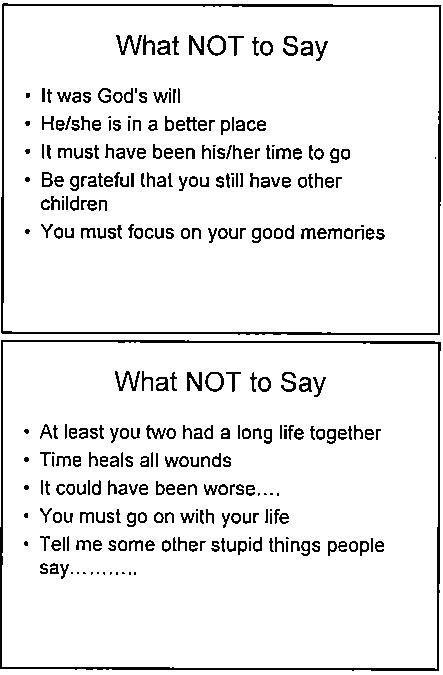
So my Death and Dying Training, in order to be a good physician, has started. I'm learning how to break bad news in a 6-step plan, how to tell someone that he/she is dying, how to help families cope, how to answer children's questions about where mommy is, and even help sick children come to terms with their own death. It hasn't been easy but here's what we learned NOT to say; it surprised me as I hear these phrases, as cliched as they may be, used all the time. But, they are in fact stupid things to say when trying to help a family cope with their loss. Someone I truly admire, Vishal, after opening up a help call center, had by himself called 40 families around Hyderabaad and told them that they had just lost their son/daughter in the 9/11 tragedy. How he managed to attain stamina to help these families come to terms with their child's death is still a mystery to me but I truly admire him and the great inner strength he possesses. Hope ya'll are careful about using theses phrases:

Saturday, November 18, 2006
WOW! --Truth to what you learn in medical school...--Migraine prevalence in the life stages of a Woman
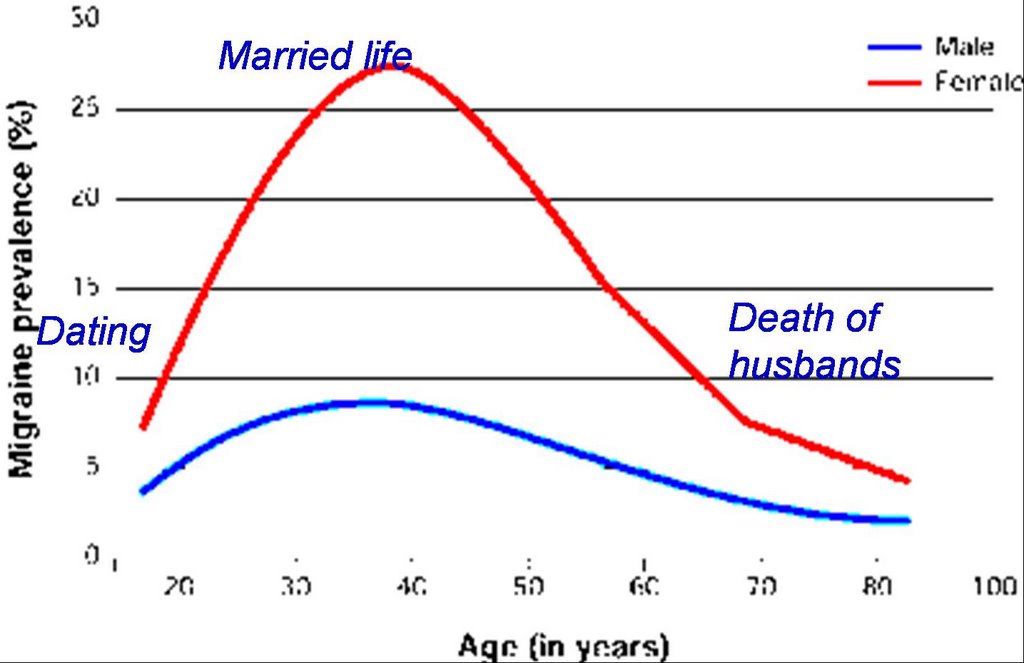
Correlation of Men causing Migraines: Migraines start in the teenage years of a woman's life, depending on when she starts dating. It peaks at a crucial turning point of her life; right after she gets married. It eventually declines and stops reoccurring following the death of her husband.

Tuesday, November 14, 2006
priority #985674829462807247585403
Birthday come... Birthday go....
what importance am I in this world? To whom does it even make a difference?
No one even called at midnight...
Even the guy who put 4 rings on my finger forgot...!
:-/
what importance am I in this world? To whom does it even make a difference?
No one even called at midnight...
Even the guy who put 4 rings on my finger forgot...!
:-/
Saturday, November 11, 2006
Babel
Do you think Paul Haggis and Guillermo Arriaga ate the same cereal in the morning? If you liked "Crash", then you will certainly like "Babel." It has become a common theme to take a peek at events in different people's lives in various locations and show how their stories are all intertwined towards the end, but these two writers do an amazingly superb job with it. What really struck me were the simple, natural, and realistic scenes in the movie. I could really relate to each person just by him focusing on portraying small little everyday tasks that the character's partake in, which makes them more real. Things that most movie directors would not even think of were big touching elements in the movie. Simple scenes like where Brad is helping his wife pee moved me soo much... How does one pee after being shot? or the scene when Rinku takes her dentist's hand and puts it you you know where; it reminded me of the famous scene in Black with Amitabh and Kajol. The innocent elements... :( blah... feeling very sucky-alone, and unspecial rt now...will have to write more when the sun shines...
The title of the movie, "Babel" is so apt...
Babel- an ancient city in the land of Shinar in which the building of a tower (Tower of Babel) intended to reach heaven was begun and the confusion of the language of the people took place.
The title of the movie, "Babel" is so apt...
Babel- an ancient city in the land of Shinar in which the building of a tower (Tower of Babel) intended to reach heaven was begun and the confusion of the language of the people took place.
Friday, October 27, 2006
Sahani-->Chadha-->Sahani-->Dr. ???
If my Nani was a Sahani and she married and became a Chadha and my mother was a Chadha and she married and became a Sahani, then that means that I would be Dr. ??? ... aahhh.. too much to think... but, hopefully--not stupid enough to get married!
Why is my mailbox being infiltrated with "GirlF***Friend" emails???
Anybody else find it odd that my 40 year old standardized patient for my physical diagnoses exam today looked at me funny when i asked him if he knows about condoms for protection after he told me he was happily married,... darn.. i spend so much time practicing, expecting a 15 yr old girl... it had to come out! glad i didn't ask him when was his last menstrual period...!!! --it was just at the tip of my tongue! :-) heheh....oh, joys of med school! okay....A-a gradient, pulmonary function tests, sarcoidosis...why do we need to know so much about the lungs anyway...? oh, reminding self to: exhale now...1,2,3...breathe...
so much we take for granted...
;-)
Why is my mailbox being infiltrated with "GirlF***Friend" emails???
Anybody else find it odd that my 40 year old standardized patient for my physical diagnoses exam today looked at me funny when i asked him if he knows about condoms for protection after he told me he was happily married,... darn.. i spend so much time practicing, expecting a 15 yr old girl... it had to come out! glad i didn't ask him when was his last menstrual period...!!! --it was just at the tip of my tongue! :-) heheh....oh, joys of med school! okay....A-a gradient, pulmonary function tests, sarcoidosis...why do we need to know so much about the lungs anyway...? oh, reminding self to: exhale now...1,2,3...breathe...
so much we take for granted...
;-)
Tuesday, October 24, 2006
Banana Anyone?
I LOVE BANANA NUT CRUNCH CEREAL!!! :cP~
Did you know that it is the black part of the banana that we consider "spoiled," is actually the part that is used to make banana pudding?
Did you know that it is the black part of the banana that we consider "spoiled," is actually the part that is used to make banana pudding?
Monday, October 23, 2006

Friday, October 20, 2006
Hi-Ho--It's off to jail We Go...

Can you make out the suited figure lurking in the mist?
Ten brave souls set out on a journey to the Eastern Penitentiary yesterday night. This massive edifice is said to have been the site where thousands of prisoners had been tortured, including the notorious, Al Capone. America's ghost hunters have picked up strange magnetic fields and have taped voices in several rooms of this prison. Now, our inquisitive medical minds set out to do some exploration and hunting on our own. What we saw and heard was not captured on film but will forever be embedded into our brains to haunt our dreams. I wish I could show you even a tenth of what I saw, but this is all I have to share as Canon doesn't fancy the dark...
So, I hope you enjoy and leave a comment or two...
http://pg.photos.yahoo.com/ph/parita_sahani/album?.dir=/47c5re2&.src=ph&.tok=phVM3rFBj7YXiPts
I guess you'll just have to check it out for yourself...
Go Here: http://www.easternstate.org/halloween/
and click on "Real Ghost Sightings"
Brrrruuuuuuuuaaaaaaahhhhhhhhhhhhhhhhhhhhhhhh!

This inmate tried to jump out at me!
Wednesday, October 18, 2006
Old people...
http://www.nytimes.com/2006/10/18/health/18aged.html?hp&ex=1161230400&en=ea6a36c0084d2d05&ei=5094&partner=homepage
Tuesday, October 17, 2006
Monday, October 16, 2006
Featured in the New Yorker...
HARD AND FAST
What an Indian tradition can do for modern dance.
by JOAN ACOCELLA
Issue of 2006-10-23
Posted 2006-10-16
Globalization may have its downside, but it could do something for modern dance that a lot of people would appreciate; namely, restore musicality. Early this month, Pandit Birju Maharaj, the reigning guru of kathak—a dance form that grew up in the Hindu temples and the Mughal courts of northern India—gave a concert at the Peter Norton Symphony Space that may have been the most remarkable display of musical chops to hit the New York dance stage this year. Maharaj is sixty-eight, and he has slowed down. In this show, he was spelled by two disciples, Saswati Sen and Mahua Shankar. Nevertheless, he was soon demonstrating the advanced-math rhythms that kathak is famous for. He showed us how to lay a three-count foot-stamping phrase over a four-count musical phrase, and how to fit fives into sixteens. Saswati Sen did a dance to a count of nine and a half, a feat few people would have dreamed of. She accomplished it by taking some of the beats at double speed, and that is something else about kathak: how fast it gets, with no sacrifice of clarity. The dancer may be spinning like a rotary blade, but, from second to second, the head and arms are making exactly this shape, then exactly that. You can’t believe it—that so many different things are coming out of one source. And that’s not to speak of the mime dances, usually based on Hindu mythology, that are done in alternation with the rhythm studies. In these routines, the kathak performer often plays several characters. In a tale from the Ramayana, Sen was now a virtuous wife, now the god who seduced her, now the enraged husband, and also the river flowing by. Kathak is probably at least eight hundred years old, and in that time it has developed extraordinary subtlety.
Occasionally, for this reason, it is confounding. Maybe a jazz musician could have counted out Sen’s nine-and-a-half-beat phrase, but I couldn’t. Likewise with the stories. That milkmaid Maharaj portrayed at one point: what was she doing, so interestingly, with her hands? Petting a dog? Making dinner? Because kathak is such a perfect, specific flower of Indian history and religion, it looks foreign, like Kabuki, and therefore it might seem that, despite the large Indian populations living in Western capitals, this form could have no effect on Western dancing. You can’t just pick it up. People say that it takes six years to learn.
But you can now learn it in the West. Akram Khan, currently the most bankable British choreographer on the international dance scene, is, artistically, the grandson of Birju Maharaj. Born in London, of Bangladeshi parents, in 1974, he was taken by his mother at the age of seven to that city’s Academy of Indian Dance, where he studied with a famous kathak master, Sri Pratap Pawar, who was trained in India by Maharaj. Until he was twenty, he says, kathak, together with music videos (he adored Michael Jackson), was all he knew. He had no idea that there was such a thing as “modern dance.” Then he went to college, where he studied Martha Graham’s technique and Merce Cunningham’s, and he came out jumbled. He started choreographing in the late nineties, and his style, he told an interviewer, was “eighty percent kathak and twenty percent modern dance.”
You could see that in “Kaash” (2002), his first evening-length piece, which he brought to New York in 2003. This was kathak, but shorn of most of the elements that make it seem exotic. Gone was the Indian garb and the eyeliner and the ankle bells. Gone were the mime dances and, with them, the thing that most makes Indian dance look strange to us, its “facialism”: the rolling eyes, the fluttering eyebrows, the coy looks and pleading looks and angry looks. This facial acting is a whole art in itself, highly stylized, and it is part of the pride of kathak, but to untrained Western audiences—and possibly also to a young Anglo-Bangladeshi growing up in London in the eighties and nineties—it can look like silent-movie acting.
So Khan got rid of the plummy parts, and he hung on to the steely parts, the rhythms. Furthermore, he transferred them to his ensemble. Kathak is traditionally performed solo, but in “Kaash” Khan had five dancers doing the fancy rhythmic combinations. More than that, he made the mathematics visual as well as audial. Again and again, in a line of dancers working in unison, one would peel off, start doing something else, in counterpoint to the others, and thus introduce the seed of change. The resulting dances looked like some biological process glimpsed through a lab microscope—cell division, maybe—where first you have unity, then disturbance and metamorphosis. Another element of kathak that Khan kept was virtuosity. He himself is a firecracker of a dancer—small, tight-strung, but quick and wild. “Kaash” ’s ensemble was just as impressive. Khan had taught the dancers kathak, not for six years, obviously, but long enough. They acted as though they had been doing this dance forever.
And narrative? Earlier this year, Khan—speaking, I believe, for all dancers rooted in what was once called the Third World—told Claudia La Rocco, of the Times, that every dance he did was narrative: “I don’t believe in the word ‘abstract,’ in what I do.” To another interviewer he said that “Kaash” had a big story, combining modern physics with ancient Hinduism: it was about Shiva, the creator-destroyer god, seen as “a black hole in space that sucks everything in—light, matter, sound.” “Kaash” is Hindi for “if.” Presumably, the title refers to the indeterminacy of Shiva’s universe.
I don’t quite buy this explanation, or, rather, I see it as background. Choreographers often start a piece with a story in mind and then create a dance in which the story is completely absorbed, becoming a mood rather than a narrative. “Kaash” had a sinister feel to it. There was a solo for a woman who seemed like a wounded insect trying to find its legs. There was also a tense, erotic duet for Khan and a woman (big, strong, excellent Moya Michael) in which he covered her eyes with his hand, blinding her. But nobody talked about Shiva, or anything else. The piece was abstract, and it looked like modern dance. For many years, modern-dance choreographers have been making good use of African dance—which is not hard, since it is so much a part of our culture—but adaptations of Asian dance tend to look like dress-up: Barbie goes to an ashram. Khan, because kathak is native, not foreign, to him, was able to beat the odds. Last spring, three years after the New York première of “Kaash,” he brought us “Ma” (2004). This dance did have an overt story—indeed, a text by the novelist Hanif Kureishi—about Mother Earth, which is what “ma” means. But, as in “Kaash,” the soul of the piece was rhythmic dancing. These two works, both set to Indian-inspired scores (“Kaash” ’s by Nitin Sawhney, “Ma” ’s mostly by Riccardo Nova), are the only really successful fusions of modern dance with Indian dance that I have ever seen.
This month, at the Brooklyn Academy of Music, as part of a celebration of the seventieth birthday of Steve Reich, Khan showed a new piece, “Variations for Vibes, Pianos, and Strings,” to a Reich composition of the same name, and it was a surprise, because it was less kathak-based, less rhythm-driven, than anything else we have seen by him. It was a trio for three men—Khan; Young Jin Kim, a Korean; and Gregory Maqoma, a South African—and it had two themes. One was multiculturalism, as embodied by the three dancers (and Reich’s music). The other was the unity of dance and music. As the curtain rose, we beheld the London Sinfonietta ranged on two sides of the stage—violins, violas, cellos, pianos, vibraphones, plus the conductor, Alan Pierson. It was just an orchestra, but, displayed in that way, like a set, it was a heart-stopping sight, the cellos gleaming, the vibraphones winking at the lights. Khan was saying how beautiful music is, and how dance is nothing without it. But, as the piece progressed, it turned out that this was all he was going to say. The dancers did solos, duets, and trios, but eventually they gave up on that and began conducting the orchestra, along with Pierson. Kathak, with its rhythmic meditations, was nowhere in evidence. I think I know why. Given the multiculturalism theme and its casting consequences—three virtuoso dancers, from three different lands—Khan could not impose his own style. On the other hand, that style is his language. Without it, he didn’t have any ideas.
I hope this isn’t a sign of things to come. Khan has told the press that he is now taking time off from his company. He’s been making a series of duets for himself and other star performers, such as Juliette Binoche (a dance-theatre piece) and the ballerina Sylvie Guillem. This project may be, in part, a product of exhaustion. After “Kaash,” Khan became famous very fast. He was covered with honors—he got an M.B.E. last year—and invited everywhere. To directors of dance festivals, there is nothing more attractive these days than a talented choreographer of bicultural origin. Khan recently said that for the past few years he has been touring ten months a year—a punishing schedule. If, as a result, he is now doing side jobs, that is understandable. It’s easier than running a company.
But, without a company, Khan will not be able to go on exploring kathak, and that would be a terrible loss. “Kaash” may have looked like modern dance, but in one sense it departed from the main line of that tradition: it was musical. Modern dance arose partly in opposition to ballet, and one of the fripperies of ballet that some early modern dancers were determined to throw off was subservience to music. We tend to locate modern dance’s split with music in the nineteen-sixties, with Judson Dance Theatre, but it began early in the century, and it hasn’t gone away. In every downtown dance venue, on every Saturday night, you can see performers doing just about anything except moving to a beat. But audiences are hungry for musical dancing, and they have found it, usually in other kinds of dance—in ballet, for example. Utterly empty ballets will often be frenetically applauded if they are performed to a rousing beat. A better example is “ethnic” dance. Why is the cheesy Riverdance such a hit? Why does the New York Flamenco Festival sell out? Because their shows are exciting musically. To come back to modern dance, what makes Mark Morris so popular? Why are the works of Ronald K. Brown the main draw of the Alvin Ailey company’s recent repertory? Partly because both men have taken their inspiration from music-bound ethnic forms—African dance in Brown’s case, Balkan dance and flamenco in Morris’s. As populations go on moving from Asia and Africa to Europe and America, this revival of musicality in modern dance will continue. I hope Khan will be part of it. That is, I hope he gets back to kathak soon.
What an Indian tradition can do for modern dance.
by JOAN ACOCELLA
Issue of 2006-10-23
Posted 2006-10-16
Globalization may have its downside, but it could do something for modern dance that a lot of people would appreciate; namely, restore musicality. Early this month, Pandit Birju Maharaj, the reigning guru of kathak—a dance form that grew up in the Hindu temples and the Mughal courts of northern India—gave a concert at the Peter Norton Symphony Space that may have been the most remarkable display of musical chops to hit the New York dance stage this year. Maharaj is sixty-eight, and he has slowed down. In this show, he was spelled by two disciples, Saswati Sen and Mahua Shankar. Nevertheless, he was soon demonstrating the advanced-math rhythms that kathak is famous for. He showed us how to lay a three-count foot-stamping phrase over a four-count musical phrase, and how to fit fives into sixteens. Saswati Sen did a dance to a count of nine and a half, a feat few people would have dreamed of. She accomplished it by taking some of the beats at double speed, and that is something else about kathak: how fast it gets, with no sacrifice of clarity. The dancer may be spinning like a rotary blade, but, from second to second, the head and arms are making exactly this shape, then exactly that. You can’t believe it—that so many different things are coming out of one source. And that’s not to speak of the mime dances, usually based on Hindu mythology, that are done in alternation with the rhythm studies. In these routines, the kathak performer often plays several characters. In a tale from the Ramayana, Sen was now a virtuous wife, now the god who seduced her, now the enraged husband, and also the river flowing by. Kathak is probably at least eight hundred years old, and in that time it has developed extraordinary subtlety.
Occasionally, for this reason, it is confounding. Maybe a jazz musician could have counted out Sen’s nine-and-a-half-beat phrase, but I couldn’t. Likewise with the stories. That milkmaid Maharaj portrayed at one point: what was she doing, so interestingly, with her hands? Petting a dog? Making dinner? Because kathak is such a perfect, specific flower of Indian history and religion, it looks foreign, like Kabuki, and therefore it might seem that, despite the large Indian populations living in Western capitals, this form could have no effect on Western dancing. You can’t just pick it up. People say that it takes six years to learn.
But you can now learn it in the West. Akram Khan, currently the most bankable British choreographer on the international dance scene, is, artistically, the grandson of Birju Maharaj. Born in London, of Bangladeshi parents, in 1974, he was taken by his mother at the age of seven to that city’s Academy of Indian Dance, where he studied with a famous kathak master, Sri Pratap Pawar, who was trained in India by Maharaj. Until he was twenty, he says, kathak, together with music videos (he adored Michael Jackson), was all he knew. He had no idea that there was such a thing as “modern dance.” Then he went to college, where he studied Martha Graham’s technique and Merce Cunningham’s, and he came out jumbled. He started choreographing in the late nineties, and his style, he told an interviewer, was “eighty percent kathak and twenty percent modern dance.”
You could see that in “Kaash” (2002), his first evening-length piece, which he brought to New York in 2003. This was kathak, but shorn of most of the elements that make it seem exotic. Gone was the Indian garb and the eyeliner and the ankle bells. Gone were the mime dances and, with them, the thing that most makes Indian dance look strange to us, its “facialism”: the rolling eyes, the fluttering eyebrows, the coy looks and pleading looks and angry looks. This facial acting is a whole art in itself, highly stylized, and it is part of the pride of kathak, but to untrained Western audiences—and possibly also to a young Anglo-Bangladeshi growing up in London in the eighties and nineties—it can look like silent-movie acting.
So Khan got rid of the plummy parts, and he hung on to the steely parts, the rhythms. Furthermore, he transferred them to his ensemble. Kathak is traditionally performed solo, but in “Kaash” Khan had five dancers doing the fancy rhythmic combinations. More than that, he made the mathematics visual as well as audial. Again and again, in a line of dancers working in unison, one would peel off, start doing something else, in counterpoint to the others, and thus introduce the seed of change. The resulting dances looked like some biological process glimpsed through a lab microscope—cell division, maybe—where first you have unity, then disturbance and metamorphosis. Another element of kathak that Khan kept was virtuosity. He himself is a firecracker of a dancer—small, tight-strung, but quick and wild. “Kaash” ’s ensemble was just as impressive. Khan had taught the dancers kathak, not for six years, obviously, but long enough. They acted as though they had been doing this dance forever.
And narrative? Earlier this year, Khan—speaking, I believe, for all dancers rooted in what was once called the Third World—told Claudia La Rocco, of the Times, that every dance he did was narrative: “I don’t believe in the word ‘abstract,’ in what I do.” To another interviewer he said that “Kaash” had a big story, combining modern physics with ancient Hinduism: it was about Shiva, the creator-destroyer god, seen as “a black hole in space that sucks everything in—light, matter, sound.” “Kaash” is Hindi for “if.” Presumably, the title refers to the indeterminacy of Shiva’s universe.
I don’t quite buy this explanation, or, rather, I see it as background. Choreographers often start a piece with a story in mind and then create a dance in which the story is completely absorbed, becoming a mood rather than a narrative. “Kaash” had a sinister feel to it. There was a solo for a woman who seemed like a wounded insect trying to find its legs. There was also a tense, erotic duet for Khan and a woman (big, strong, excellent Moya Michael) in which he covered her eyes with his hand, blinding her. But nobody talked about Shiva, or anything else. The piece was abstract, and it looked like modern dance. For many years, modern-dance choreographers have been making good use of African dance—which is not hard, since it is so much a part of our culture—but adaptations of Asian dance tend to look like dress-up: Barbie goes to an ashram. Khan, because kathak is native, not foreign, to him, was able to beat the odds. Last spring, three years after the New York première of “Kaash,” he brought us “Ma” (2004). This dance did have an overt story—indeed, a text by the novelist Hanif Kureishi—about Mother Earth, which is what “ma” means. But, as in “Kaash,” the soul of the piece was rhythmic dancing. These two works, both set to Indian-inspired scores (“Kaash” ’s by Nitin Sawhney, “Ma” ’s mostly by Riccardo Nova), are the only really successful fusions of modern dance with Indian dance that I have ever seen.
This month, at the Brooklyn Academy of Music, as part of a celebration of the seventieth birthday of Steve Reich, Khan showed a new piece, “Variations for Vibes, Pianos, and Strings,” to a Reich composition of the same name, and it was a surprise, because it was less kathak-based, less rhythm-driven, than anything else we have seen by him. It was a trio for three men—Khan; Young Jin Kim, a Korean; and Gregory Maqoma, a South African—and it had two themes. One was multiculturalism, as embodied by the three dancers (and Reich’s music). The other was the unity of dance and music. As the curtain rose, we beheld the London Sinfonietta ranged on two sides of the stage—violins, violas, cellos, pianos, vibraphones, plus the conductor, Alan Pierson. It was just an orchestra, but, displayed in that way, like a set, it was a heart-stopping sight, the cellos gleaming, the vibraphones winking at the lights. Khan was saying how beautiful music is, and how dance is nothing without it. But, as the piece progressed, it turned out that this was all he was going to say. The dancers did solos, duets, and trios, but eventually they gave up on that and began conducting the orchestra, along with Pierson. Kathak, with its rhythmic meditations, was nowhere in evidence. I think I know why. Given the multiculturalism theme and its casting consequences—three virtuoso dancers, from three different lands—Khan could not impose his own style. On the other hand, that style is his language. Without it, he didn’t have any ideas.
I hope this isn’t a sign of things to come. Khan has told the press that he is now taking time off from his company. He’s been making a series of duets for himself and other star performers, such as Juliette Binoche (a dance-theatre piece) and the ballerina Sylvie Guillem. This project may be, in part, a product of exhaustion. After “Kaash,” Khan became famous very fast. He was covered with honors—he got an M.B.E. last year—and invited everywhere. To directors of dance festivals, there is nothing more attractive these days than a talented choreographer of bicultural origin. Khan recently said that for the past few years he has been touring ten months a year—a punishing schedule. If, as a result, he is now doing side jobs, that is understandable. It’s easier than running a company.
But, without a company, Khan will not be able to go on exploring kathak, and that would be a terrible loss. “Kaash” may have looked like modern dance, but in one sense it departed from the main line of that tradition: it was musical. Modern dance arose partly in opposition to ballet, and one of the fripperies of ballet that some early modern dancers were determined to throw off was subservience to music. We tend to locate modern dance’s split with music in the nineteen-sixties, with Judson Dance Theatre, but it began early in the century, and it hasn’t gone away. In every downtown dance venue, on every Saturday night, you can see performers doing just about anything except moving to a beat. But audiences are hungry for musical dancing, and they have found it, usually in other kinds of dance—in ballet, for example. Utterly empty ballets will often be frenetically applauded if they are performed to a rousing beat. A better example is “ethnic” dance. Why is the cheesy Riverdance such a hit? Why does the New York Flamenco Festival sell out? Because their shows are exciting musically. To come back to modern dance, what makes Mark Morris so popular? Why are the works of Ronald K. Brown the main draw of the Alvin Ailey company’s recent repertory? Partly because both men have taken their inspiration from music-bound ethnic forms—African dance in Brown’s case, Balkan dance and flamenco in Morris’s. As populations go on moving from Asia and Africa to Europe and America, this revival of musicality in modern dance will continue. I hope Khan will be part of it. That is, I hope he gets back to kathak soon.
Saturday, September 30, 2006
he doesn't mean what he says...
Ladies, watch out when u stay over his place over the weekend and he kisses you in the middle of the night and says that he loves you; he doesn't mean it! Yes, even the most sincere one, (-who u thought is the jem and prince charming,) doesn't mean it! It's just a "tool" that he uses and says so that you get on top of him and ride him!
We knew this before nah?... so what made us think that this guy is different?
I should have realized why he said it...Just look at the timing of it; had he ever said it to me in the day? Dumbass, stupid me,--for believing him THAT NIGHT... or EVER for the matter of fact,....
Since when does a guy ever mean what he says or even lives up to what he had said...???
I have yet,... to meet a REAL MAN...
We knew this before nah?... so what made us think that this guy is different?
I should have realized why he said it...Just look at the timing of it; had he ever said it to me in the day? Dumbass, stupid me,--for believing him THAT NIGHT... or EVER for the matter of fact,....
Since when does a guy ever mean what he says or even lives up to what he had said...???
I have yet,... to meet a REAL MAN...
Thursday, September 28, 2006
If you get something that is hard to find, don't let go of it, Dummy!
Upon further thought on the rather sensuous picture I placed below...
Is establishing a connection and experiencing intimacy with your partner important for good sex?
If so, how often do we experience that intimacy in our lives and when we have it, why don't we hold on to it and take care of it...?
Is establishing a connection and experiencing intimacy with your partner important for good sex?
If so, how often do we experience that intimacy in our lives and when we have it, why don't we hold on to it and take care of it...?

Wednesday, September 27, 2006
I am what I learn...
I'm an Alcoholic Depending, Bipolar Type I, Demented, Obsessive Compulsive, and Delerious Hypochondriac, who lacks sleep, battles an Euphoric Addiction, and suffers from Conversion, Somatization, Cognitive Impairment, and Malingering, Body Dysmorphic, Munchausen, Fictitious Disorder.
In other words, I have Medical School Syndrome; nevertheless, I find Psychiatry to be a Dangerous tool that has been Unleashed in our Society. Remember, there is no such thing as a criminal--just people like you and me who self-inflict temporary insanity! Not to worry, just: Smile,...DocsHere! :-)
In other words, I have Medical School Syndrome; nevertheless, I find Psychiatry to be a Dangerous tool that has been Unleashed in our Society. Remember, there is no such thing as a criminal--just people like you and me who self-inflict temporary insanity! Not to worry, just: Smile,...DocsHere! :-)
Monday, September 25, 2006
Aging...
When does aging become a bad word?
Do you realize that the only time in our lives when we like to get old is when we're kids? If you're less than ten years old, you're so excited about aging that you think in fractions. "How old are you?" "I'm four and a half." You're never 36-and-a-half ...you're four-and-a-half going on 5.You get into your teens; now they can't hold you back. You jump to the next number. "How old are you?" "I'm gonna be 16."You could be 12, but you're gonna be 16. Eventually. Then the great day of your life; you become 21. Even the words sound like a ceremony. You BECOME 21....Yes!! Then you turn 30. What happened there? Makes you sound like bad milk. He TURNED; we had to throw him out. What's wrong? What changed? You BECOME 21; you TURN 30. Then you're PUSHING 40....stay over there. You REACH 50.You BECOME 21; you TURN 30; You're PUSHING 40; you REACH 50; then you MAKE IT to 60.By then you've built up so much speed, you HIT 70.After that, it's a day by day thing. You HIT Wednesday...You get into your 80's; you HIT lunch, you HIT 4:30. My Grandmother won't even buy green bananas. "Well, it's an investment, you know, and maybe a bad one." And it doesn't end there....Into the 90's, you start going backwards. "I was JUST 92."Then a strange thing happens; if you make it over 100, you become a little kid again. "I'm 100 and a half."
I hope all of you live long and healthy and make it 100 and a half! --Remember all you need is a little fresh air, salmon, garlic, and wine and may you be MERRY and YOUNG ALWAYS! ;-)
Recording of FBI phone call to the Taliban government
http://www.conservativetruth.org/humor/Taliban%20phone%20call.mp3
"Girls are Sexy, Boys Drink Pepsi..."
We chanted this when we were little, but what's the truth behind Gender Identity?
http://www.nytimes.com/2006/09/24/magazine/24intersexkids.html?ei=5070&en=c65d26e6e4fbf256&ex=1159675200&emc=eta1&pagewanted=all
Do you realize that the only time in our lives when we like to get old is when we're kids? If you're less than ten years old, you're so excited about aging that you think in fractions. "How old are you?" "I'm four and a half." You're never 36-and-a-half ...you're four-and-a-half going on 5.You get into your teens; now they can't hold you back. You jump to the next number. "How old are you?" "I'm gonna be 16."You could be 12, but you're gonna be 16. Eventually. Then the great day of your life; you become 21. Even the words sound like a ceremony. You BECOME 21....Yes!! Then you turn 30. What happened there? Makes you sound like bad milk. He TURNED; we had to throw him out. What's wrong? What changed? You BECOME 21; you TURN 30. Then you're PUSHING 40....stay over there. You REACH 50.You BECOME 21; you TURN 30; You're PUSHING 40; you REACH 50; then you MAKE IT to 60.By then you've built up so much speed, you HIT 70.After that, it's a day by day thing. You HIT Wednesday...You get into your 80's; you HIT lunch, you HIT 4:30. My Grandmother won't even buy green bananas. "Well, it's an investment, you know, and maybe a bad one." And it doesn't end there....Into the 90's, you start going backwards. "I was JUST 92."Then a strange thing happens; if you make it over 100, you become a little kid again. "I'm 100 and a half."
I hope all of you live long and healthy and make it 100 and a half! --Remember all you need is a little fresh air, salmon, garlic, and wine and may you be MERRY and YOUNG ALWAYS! ;-)
Recording of FBI phone call to the Taliban government
http://www.conservativetruth.org/humor/Taliban%20phone%20call.mp3
"Girls are Sexy, Boys Drink Pepsi..."
We chanted this when we were little, but what's the truth behind Gender Identity?
http://www.nytimes.com/2006/09/24/magazine/24intersexkids.html?ei=5070&en=c65d26e6e4fbf256&ex=1159675200&emc=eta1&pagewanted=all
Tuesday, September 12, 2006
AOA Blog
Health Policy Notes
The Congressional Budget Office released a "budget brief" on 9/7/06 asserting that increasing physician payment rates by 1% in 2007 would have a five-year cost of $13 billion. If physician payment rates increased at the rate of medical inflation, the five-year cost would be $58 billion and $218 billion over 10 years.
Researchers to date have identified over 200 of the genes that cause breast and colorectal cancers, which will most likely lead to new methods of diagnosing and treating such cancers, according to the 9/6/06 Chicago Sun-Times.
The 9/8-10/06 USA Today reported that American's use of illegal drugs rose overall between 2004-2005 to 8.1% of the population; however, adults aged 50-59 had the most dramatic rise, 63% from 2002 to 2005.
The Congressional Budget Office released a "budget brief" on 9/7/06 asserting that increasing physician payment rates by 1% in 2007 would have a five-year cost of $13 billion. If physician payment rates increased at the rate of medical inflation, the five-year cost would be $58 billion and $218 billion over 10 years.
Researchers to date have identified over 200 of the genes that cause breast and colorectal cancers, which will most likely lead to new methods of diagnosing and treating such cancers, according to the 9/6/06 Chicago Sun-Times.
The 9/8-10/06 USA Today reported that American's use of illegal drugs rose overall between 2004-2005 to 8.1% of the population; however, adults aged 50-59 had the most dramatic rise, 63% from 2002 to 2005.
Subscribe to:
Posts (Atom)
